
The poorest of peasants in France in the 17th century did not have horses, mules, carts, and carriages. They traveled on foot and, by necessity, carried whatever they could–but only what they needed. They used baskets, wooded frames, cross-body satchels, fardes (like a hobo’s bindle,) and sac à dos — literally, ‘bag for the back.’
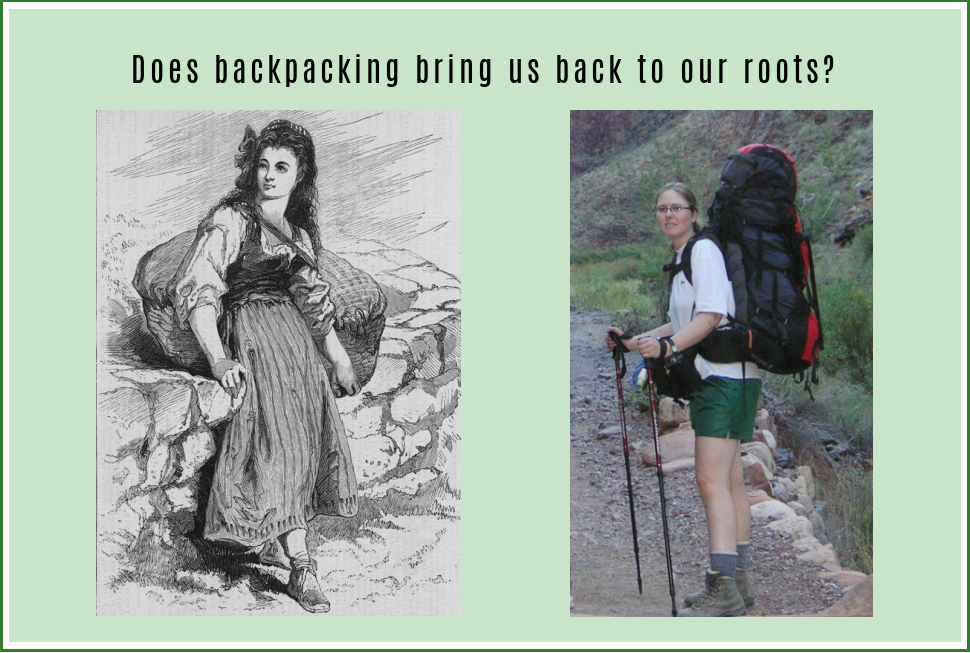
As I do research for my historical novel, I am fascinated by the tiny, everyday details of peasant lives. How did they get by without the simple things we now take for granted? I’m amazed they did get by…but that shows the ingenuity and resourcefulness of humans since the beginning of time. It makes me ponder…how would I get by without a car? No soap? No stove? No phone?
Peasants were minimalists by circumstance, not choice, and I admire their resilience. That’s why I like minimalist camping and backpacking…take only what you can carry. BTW, That’s not me in the picture on the right. That’s a friend from my backpacking trip across the Grand Canyon (the trip I used to frame my Adventure Mystery, Rim to Rim-Death in the Grand Canyon.) My pack was smaller and lighter than anyone’s on the trek. It’s very liberating to have only what you need.
We recently cleaned out our clutter and downsized to a smaller house. I now feel lighter, less burdened. I’m a minimalist at heart. It applies to camping, my writing, and to life in general, I suppose: Don’t accumulate and get rid of stuff you don’t need.
Are you the sort of camper who brings everything you possibly can… or the least you get away with?
For more about my research visit: https://www.facebook.com/groups/1185865059974956


 Jeanne Meeks ~ Fiction Author
That’s the biggest backpack, an example of carrying too much. I think I’d fall over now, even with a lighter pack.
LikeLike
Better photos of examples of modern backpacks.
LikeLike