
Louis Rock Rochon, my great-grandfather, was a rolling stone.(Pun intended.) He was born in 1848 in Quebec. When he was 17, his father died; then Louis immigrated to Illinois in 1867. He was still single and living in as a boarder in Chicago in 1880, but moved back to Canada the next year to live with siblings. The Canadian 1881 census lists his occupation as “Voyager” which, at the time, meant a worker on the river, probably for a lumber company.
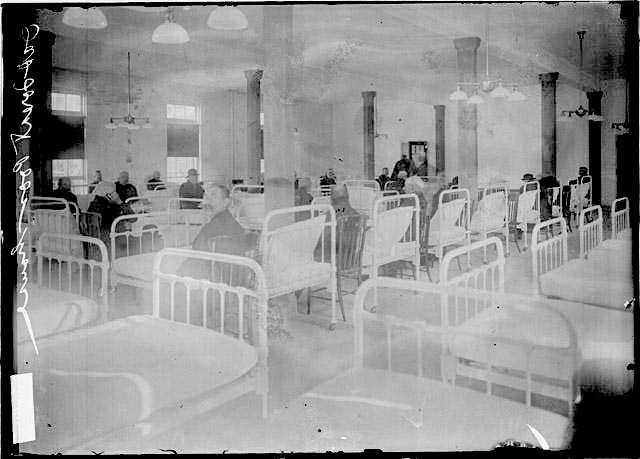
Rock got married in Montreal at age 38, moved to Chicago. He and Marie Louise had nine children, three of whom died as toddlers. He worked as a street cleaner for the city of Chicago and abandoned his family in 1903 to live down the street with another woman. Seven years later the 1910 census shows he lived on the Cook County poor farm where he worked for wages as a laborer in the lumber yard. He died there in 1927 at age 82.
The Cook County Institution or Oak Forest Infirmary was built in 1910-11 to ease the overcrowding at the infamous Dunning Institute. The new site’s hundreds of acres were meant to house the indigent, elderly, and chronically ill TB patients. The complex had dormitories, hospital buildings, farm buildings, a school for young TB patients, and its own infrastructure. At its peak it had 4,000 residents.
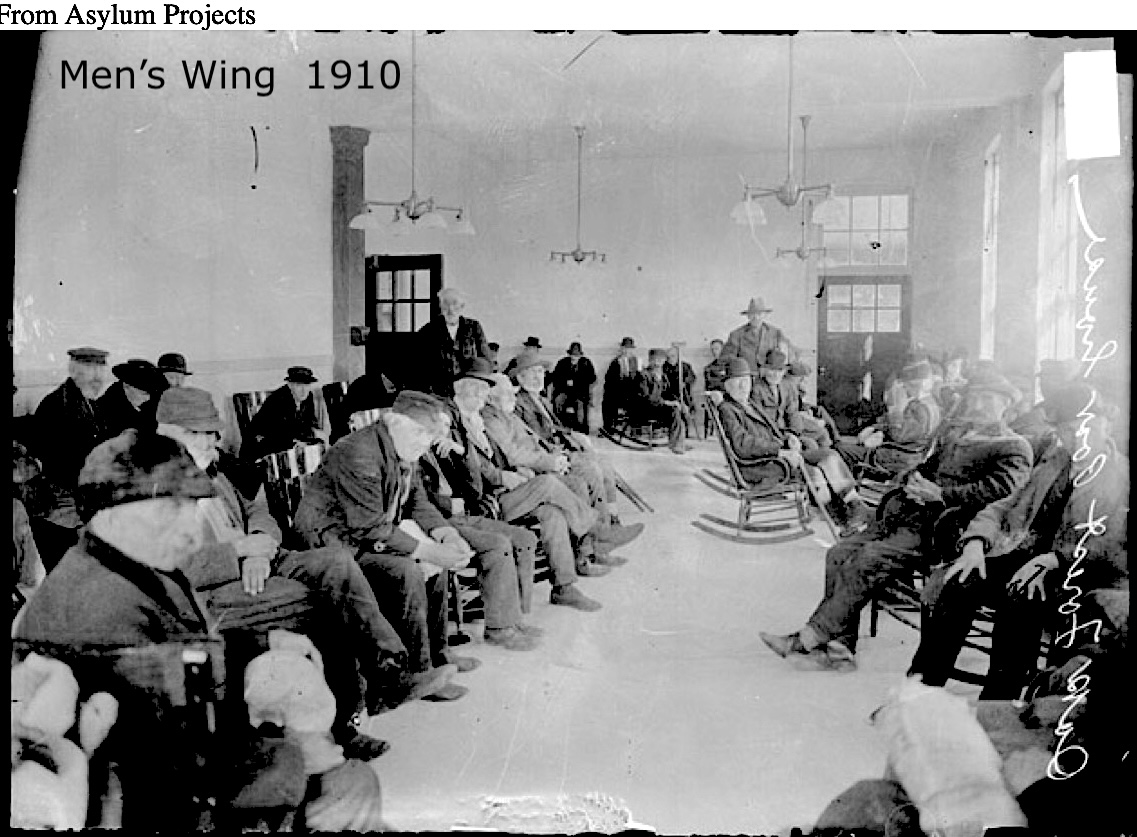
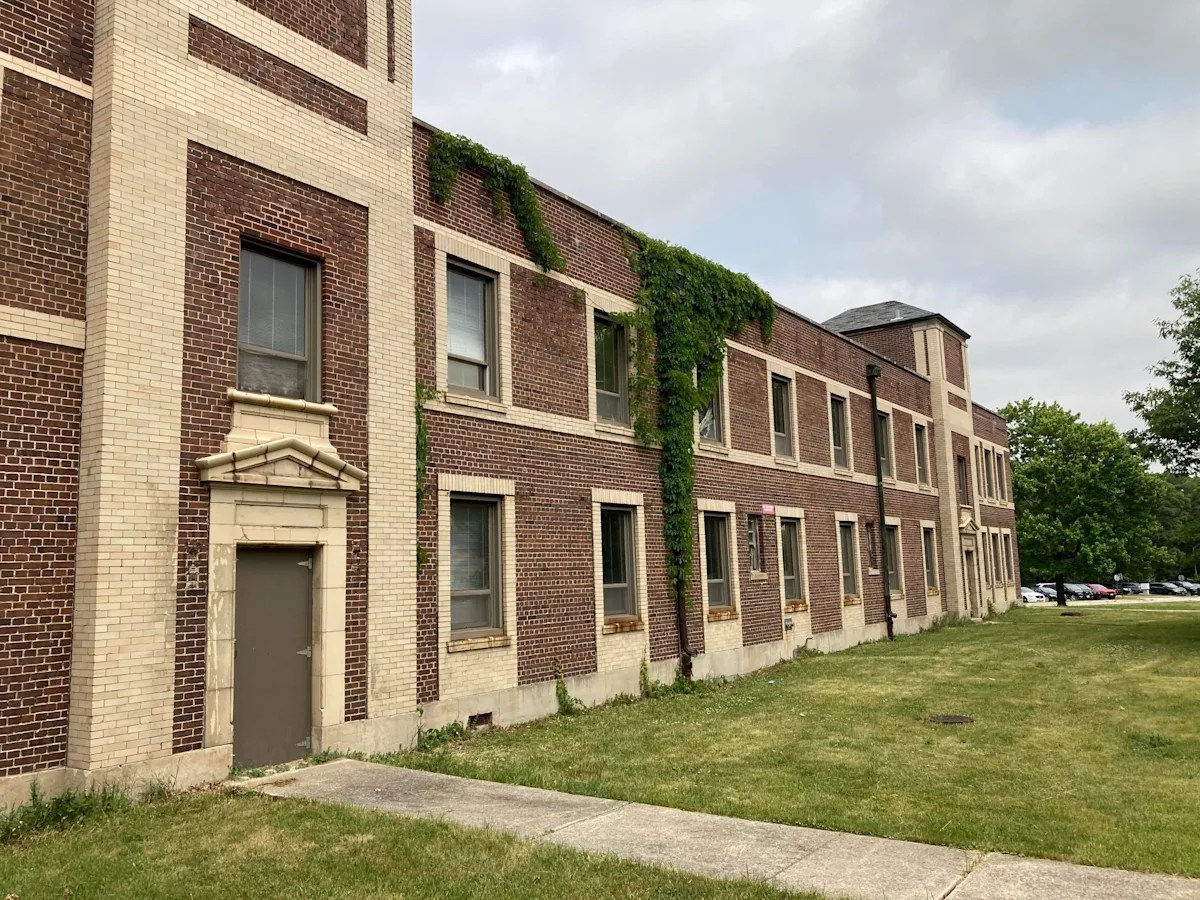
When I was a kid, St. Damian parish in Oak Forest had just begun and had no church, so Mass was held at the infirmary. My mother never knew her grandfather had been a resident there for many years. Our Girl Scout troop went to sing Christmas carols for the elderly residents several times. I remember the awful smell.
The old hospital discontinued its inpatient services back in 2011. As of now, most of the remaining buildings are vacant.
- The county is now leading a demolition program of many of the unused buildings.
- Some buildings have been identified as potentially historic or of reuse value, and would be preserved.
- The Old Growth Oak Savanna at the northwest corner of the campus is to be protected.
- The burial sites in the Pauper’s Cemetery (including those with remains from the 1918 flu pandemic and indigent burials) will be preserved.
- In 1958 an upper Mississippi late-prehistoric Native American village was unearthed on the site, including items to indicate early European contact, These were possibly ancestors to Miami, Potawatomi or Illini tribes. This archeological site will be protected.
It’s amazing what you can find in your own backyard.
Follow my website as I trace my Rochon family roots for my historical fiction novel.


Jeanne,
I enjoyed your history story. Great writing. Over the years I accumulated the history of the shores of Lake Owen and later periodically led hike on the North Country Trail that adjoins Lake Owen for over a mile. That section was the site of the largest Indian village in northern Wisconsin. Here are excerpts from my handout:
Arrival of the Ojibwa Indians
Warfare with the Iroquois Indians and displacement by European settlers in the 18th Century drove out the Algonquian up the Saint Lawrence seaway to eventually Lake Superior, bringing with them the knowledge of building lightweight birch bark canoes. Those Algonquian Indians settling around Lake Superior called themselves Ojibwa. The Ojibwa living in the Northwoods of Wisconsin main diet were wild rice, bear, deer, elk, moose, and maple syrup. Long and narrow Lake Owen became the preferred waterway and trading route by canoe from the Lake Superior region, up the Bad River to the White River to Lake Owen, down the turtle portage to the Namekagon River, then to Saint Croix River, the Mississippi River and points south.
Lumber Barons
The lumber barons drove railroads into the Lake Owen area starting in the 1880’s. By 1893 Wisconsin became the world leader in lumber production with more than 3.5 billion yearly board feet. By the time of the Great Depression, the entire northern Wisconsin forest was logged flat save less than a dozen small patches of a few acres of virgin forest, two of which are on the hike. These two patches of virgin Hemlock pines were not logged because the saw mill would have to close to retool their saw blades for Hemlock and they could make more money by sawing the surrounding full grown red and white pine. In 1935, the National Forest took over ownership of the land around Lake Owen.
Lake Owen Hardwoods State Natural Area:
Designated a State Natural Area in 2007 because of its current undisturbed wild character, the entire route of the North Country Trail goes through this area from just north of the picnic grounds to five miles east towards Porcupine Lake. This area has two high quality stands of old-growth virgin hemlock trees in a large tract of unfragmented, pine and hardwood forest near the Lake Owen shore. Hemlock is reproducing under the fire-origin paper birch. The hardwoods are dominated by sugar maple and red oak with scattered white pine and smaller amounts of paper birch, big-toothed aspen, and red maple. Several small seepage lakes and ponds and are associated with communities of black ash swamp, muskeg/open bog, emergent and floating leaved aquatics, and red maple-cinnamon fern swamp with iris swales. Mature, rich sugar maple-basswood forest is scattered throughout. Also present is a small inclusion of bedrock controlled landscape (Gogebic-Penokee Range) with shaded wet and dry cliffs that support a remnant red pine community and two rare plant species. Common ground-layer species include sweet cicely, big-leaved aster, Pennsylvania sedge, Canada mayflower, sessile-leaved bellwort, downy Solomon’s-seal, and shining club-moss.
Jeanne,
Keep up your emails and your work. I enjoy them.
Ed
LikeLike
Ed – Thanks for your comments and your notes. I’ve copied them to refer to when I research my second book (2026-27) which will be set in the late 1600s and early 1700’s along the St. Lawrence and into the Great Lakes. If you come across reference to French traders or missionaries in your reading during that period, please share your sources.
LikeLike