
In seventeenth-century rural France, death was a communal matter, marked by ritual, prayer, and neighborly duty. Death was announced by the tolling of the church bell…the death knell…and everyone knew from its sound whether the deceased was male, female, or a child.
As soon as possible, women prepared the body, dressed it in simple linen, and laid it on a table or board in the main room of the house. Candles were burned at the head and foot to guide the soul. Neighbors crowded into the room to pray, some bringing simple food, and to keep vigil. They took turns “watching,” so the body was never alone.
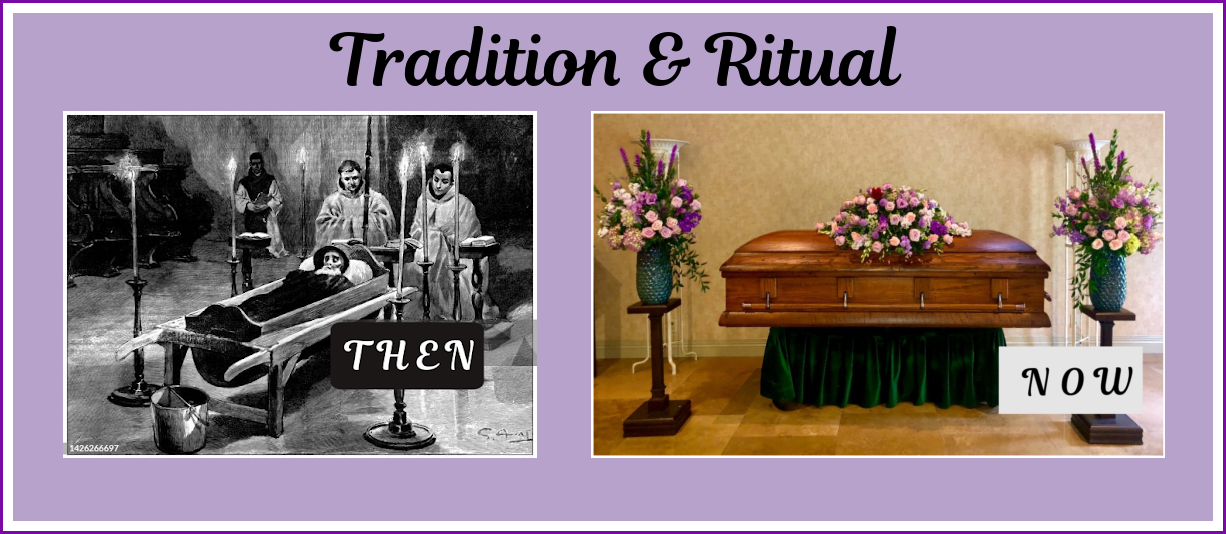
Funerals were often held the morning after death, since bodies could not be kept long. The body was placed on a bier, which was stored at the church, and covered with a communal pall, a black woolen cloth. The “passing bell” tolled from the parish church, summoning villagers to join the procession to Mass at the church.
The priest led the way, preceded by an altar boy carrying a cross. Behind them came the bier, borne on the shoulders of male neighbors, and followed by the grieving family. Villagers joined in silence or chanting familiar prayers and hymns.
After the burial, neighbors brought food to the grieving household—bread, cheese, wine, or a pot of soup. By sharing food and gathering around the table after the burial, peasants reaffirmed their community and eased the family’s hunger and sorrow.
Even with today’s elaborate funerals, you can still see similar traditions: wakes, candles, processions, and funeral luncheons. They had the right idea…keep it personal and simple It’s all about supporting the family.
For more news from the 17th century, visit my FB group: https://www.facebook.com/groups/1185865059974956


 Jeanne Meeks ~ Fiction Author