
Toothbrushes were invented in about 1690 and only the wealthy could afford the imported bristled brushes. Peasants of 1650 (and most cultures going back 600 years) used twigs (such as hazel) chewed until frayed to clean their teeth with a tooth powder made from ashes or ground egg shells or animal bones. Or they simply used a rag or their finger. They might have rinsed with vinegar or water or chewed sage, rosemary or mint to freshen their breath.
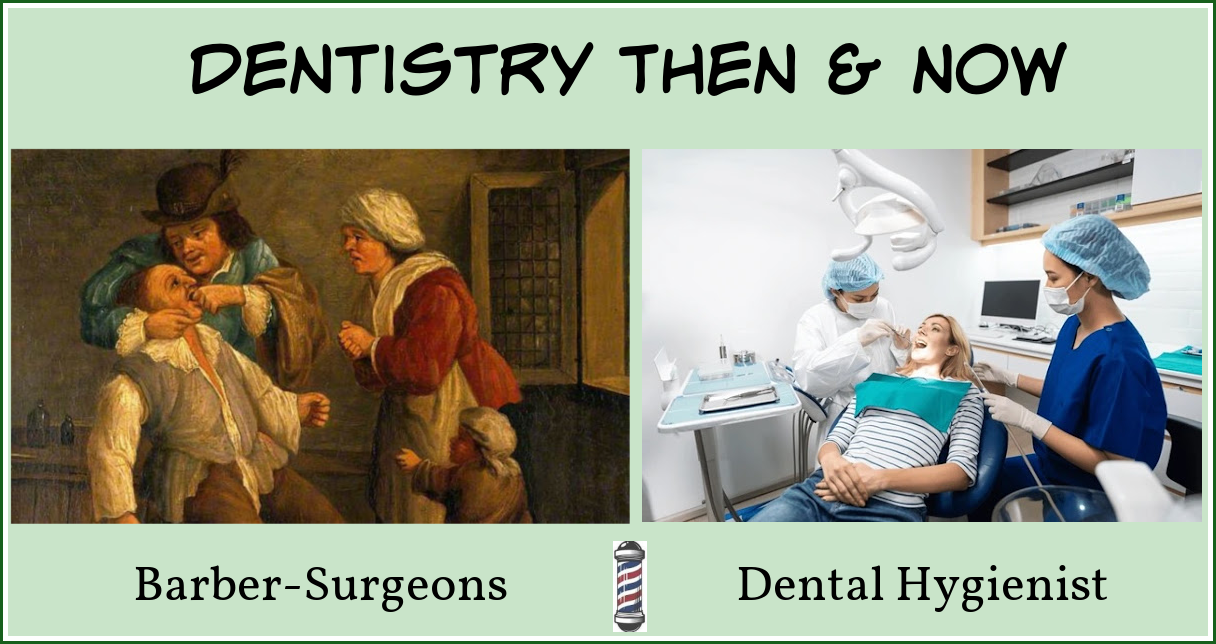
Surprisingly, peasants had fewer cavities than modern people, because refined sugar was rare. However, their diet included rough and gritty grained bread which wore down their teeth. By middle age, most peasants’ teeth were worn flat and many also lost teeth to gum disease or abscesses. When that happened, they’d visit the friendly village barber. Barbers were called as of 1210 Surgeons of the Short Robe (as opposed to Long Robes who were trained in universities). The barber-surgeons trained through apprenticeships and performed services such as haircuts, shaving, bloodletting, tooth extraction, and setting broken bones.
The barber pole, as we know it, evolved from the red pole a Long Robe Physician in Europe might have displayed. In a small village lucky enough to have a barber, an advertising pole wasn’t necessary since everyone knew where to go. The stripes are said to symbolize blood from the bloodletting and bandages. Those bandages might have been hung out to dry and twirled in the wind, hence the spinning striped barber pole.
If a community was too small to have a barber-surgeon, anyone who had a pliers and was strong enough could pull a rotten tooth.
It’s no wonder some people have an instinctive fear of dentists.


 Jeanne Meeks ~ Fiction Author